How to price and protect a product when one AI vendor supplies the brain
Treat the AI vendor as a rented capability: price the recurring relationship, keep customer data, and contract for an exit before you sign.
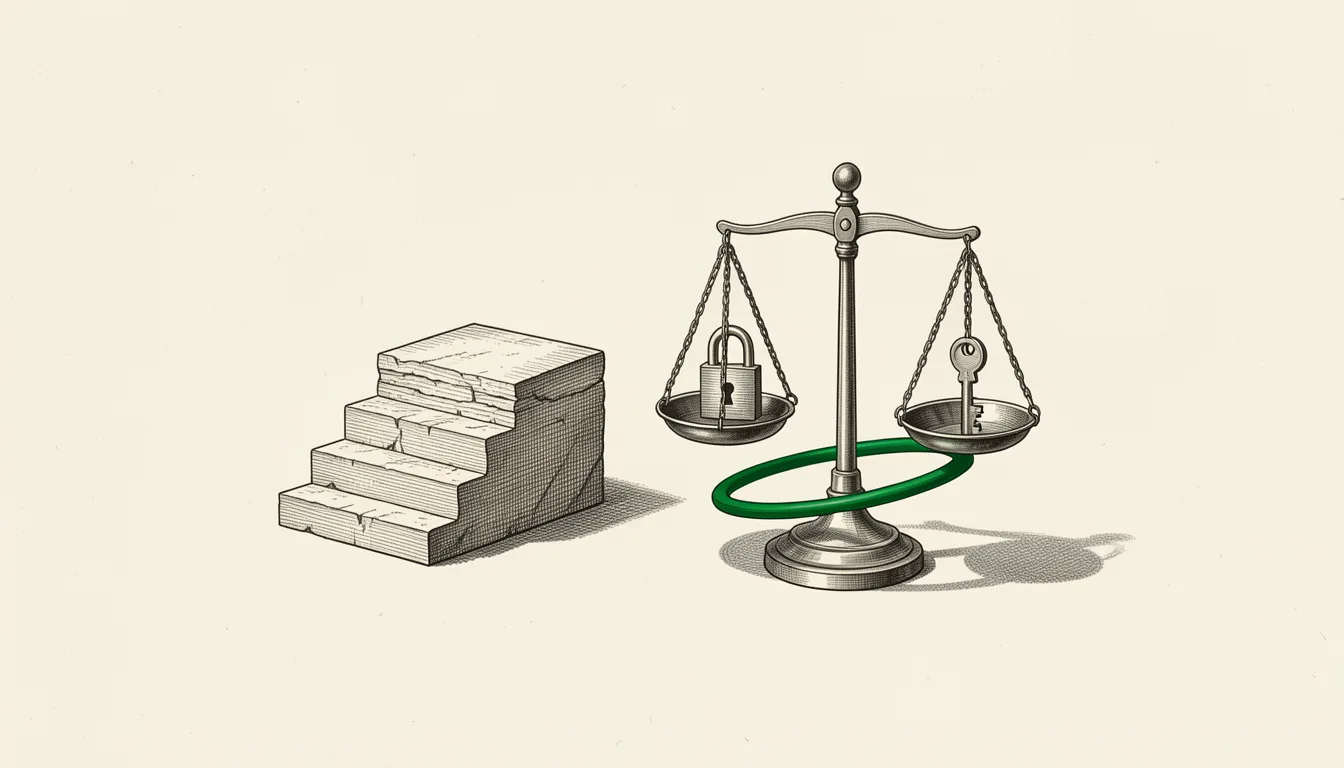
Price the recurring relationship, not the hardware, and contract for customer ownership before you let a single AI vendor supply the core capability. Treat the vendor as an external capability with a defined exit. When the core capability is a model you do not control, pricing must reflect the outcome you sell and the risk that the supplier can raise cost or change terms. The buyer is purchasing uptime, throughput, and a service that keeps working when the intelligence changes.
Price the relationship, not the robot
Start by separating the hardware you install from the intelligence that makes it useful. A customer may pay an upfront integration fee and then a recurring monthly fee for hardware and software support. In 2026, a warehouse picking robot can run about $2,000 a month under that model. If your product depends on an outside AI supplier, the recurring fee must cover the supplier's cost, your support cost, and a margin that survives a price increase.
In robotic manipulation, the software and AI intelligence layer is attracting value faster than hardware, with gross margins of 28-40% versus 10-14% for hardware sub-systems. That margin difference is why the monthly line should carry most of the value. Model improvements should reach the customer without a surprise invoice. Cost increases should be governed by a pass-through rule in your contract.
Done looks like a price sheet with clear lines: integration, monthly service, and a performance guarantee. If the vendor can raise the recurring fee without notice, your contract needs a pass-through rule. Put the rule in the signature version, not in a side letter, because the customer will test the service at peak, not at renewal.
Stress-test your pricing against a funded example
Ultra, a Brooklyn-based robotics company, secured $62 million in funding and expanded its collaboration with Physical Intelligence, an AI firm. Ultra sells warehouse robots through a monthly robots-as-a-service arrangement, charging an upfront integration fee and a recurring fee for hardware and software support. Its robots have packed more than 500,000 orders at U.S. warehouse sites. The AI supplier has a valuation of $5.6 billion. The supplier's π0.6 model reportedly reached 96.4% autonomy during full warehouse shifts, based on deployment data released in February 2026. Ultra's service model has let it raise prices.
The case shows a company pairing a recurring service with an outside AI supplier. For robotic manipulation, the 2025-2032 forecast frames RaaS subscriptions as a way around capital and staffing barriers, while also creating vendor lock-in. In a September 2025 case, a fleet was expanded in 25-unit blocks to meet peak demand. Use that as a benchmark: if your pricing cannot absorb supplier cost changes, fleet scaling, and performance commitments, it is too thin.
Contract for the exit before the first invoice
Before you sign, write down what happens when the relationship ends. In the 2026 RaaS market, buyers need to secure uptime and end-of-term options before signing. A long minimum term paired with weak performance guarantees is the main pitfall. If your vendor supplies the core capability, the exit cost includes replacing the model, retraining staff, and keeping the customer while the product runs on another supplier.
In the 2025-2034 warehouse robotics forecast, multi-manufacturer fleet orchestration platforms are reducing vendor lock-in by letting operators mix hardware under one control layer. That gives you leverage. The signed contract has a defined handoff: data export format, model access for a transition period, and a price for continued support after termination. The contract should also say who pays for the transition and what the customer receives if the service stops working.
Keep the customer data in your hands
The AI vendor may supply the model, but the customer should not belong to the vendor. When the model improves by learning from your customer's orders, you need to know who owns that learning. A vendor right to use your customer's data to train a competitor's model gives a competitor a channel to your customer.
The clause should say your customer's operational data remains yours, the vendor gets a limited license to process it, and the customer can take the data with them at end of term. The product's defensible part is the customer relationship. It also gives you a cleaner exit if the supplier raises its price or changes its model. Keep the scorecard simple: what you keep, what you rent, who owns the customer, and what the exit costs.