Pricing Your Next Up-Round: Ladder, Inflection, Line
A next round is priced by the step multiple, the dated inflection that justifies it, and the line item the money actually buys.

The round is priced by the step, not the story
When you prepare to raise, the number to pin down is not the ask. It is the multiple that separates your last valuation from the next one. A round without a dated inflection stays a hope. A round with one becomes a line item.
Blacksmith, a CI infrastructure company, is a useful case because the sequence is short and the dates are close.
It announced a $66 million Series C with Sequoia Capital leading, at a $1 billion valuation on October 21, 2026.
About two months earlier, it had raised a $45 million Series B at a $550 million valuation.
Before that, it raised $10 million in September 2025.
The step from $550 million to $1 billion in roughly two months is the multiple a board should defend.
Perplexity's $200 million raise was priced at $20 billion after a $18 billion valuation a few months earlier, a 1.1x step.
Sierra's 2026 $950 million round was priced at $15.8 billion post-money, up from a 2025 valuation of $10 billion, a 1.58x step.
ElevenLabs priced an early-2026 Series D at $11 billion after ending 2025 with ARR above $330 million, with the round size at $500 million.
Round pricing is easier when the step is dated and the use of proceeds is named.
The inflection needs a date and a workload
The dated inflection was the workload, not the raise.
Blacksmith's weekly CI jobs went from 5 million in January 2026 to over 90 million in October 2026.
Annual recurring revenue grew 17x from the start of 2026 to October 2026, and CEO Aditya Jayaprakash said revenue was then in the tens of millions.
Customer count moved from about 5,000 companies in August 2026 to more than 10,000 by October 2026.
Those are the dates an investor will ask for. They are also the dates you should use to set the step.
Manus, an AI firm, crossed $100 million ARR nine months after launching on March 6, 2025.
The Information later reported a near-$500 million annualized run rate in June 2026.
Butterfly Effect, the parent of Manus, closed a round above $500 million on October 8, while earlier reports had placed the target near $4 billion.
That pair shows why the date matters.
The revenue line moved before the valuation line did.
Enterprise generative AI spending hit $37 billion in 2025, versus $11.5 billion in 2024, and $19 billion went to the application layer.
Foundation-model builders put out roughly $1 trillion in AI infrastructure commitments.
Those numbers do not price a company. They give the step a market context.
The ledger is the test
The line item was compute.
The CEO said most of the $66 million would buy computing power.
Headcount was planned to grow from about 40 employees to about 75 by the end of 2026.
It is a use of proceeds, not a vague plan. It tells the board what the valuation is for.
A step multiple is only as good as the date behind it. If the date is after the ask, the investor is buying a forecast.
A use of proceeds is only as good as the capability it produces. If the capability is already in place, the money is buying time.
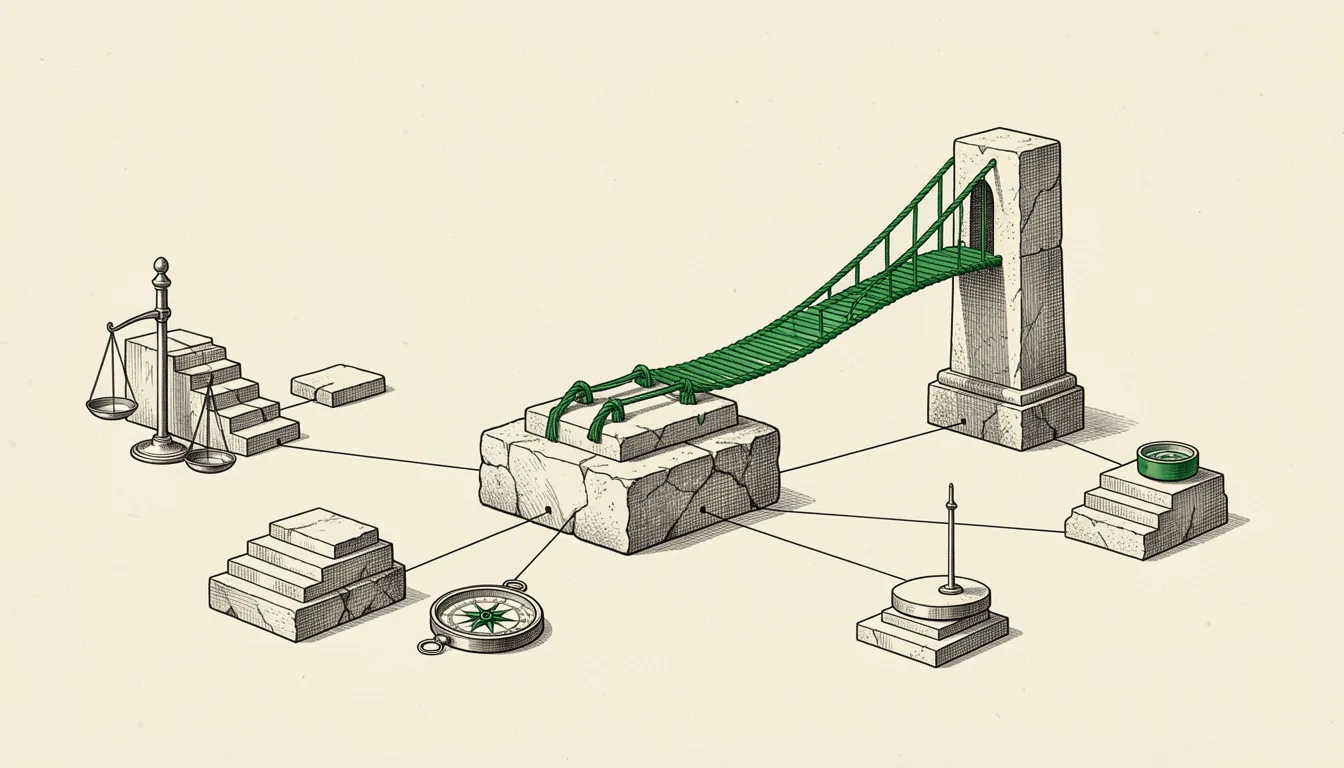
Keep a short ledger. It has a step line, an inflection line, and a use line. The step line tests the price. The inflection line tests the date. The use line tests what the money buys. Each line should survive a quick check before you send the deck.
- Step multiple: write the last valuation, the proposed valuation, and the ratio between them. If the ratio is large, the inflection line must be dated and measurable.
- Dated inflection: name the change that happened before the ask, with a month and a number. A launch, a workload jump, a revenue multiple, or a customer-count step all work if the date is real.
- Line item: assign the proceeds to compute, headcount, or runway. If the money is buying a capability, say which one and when it comes online.
If the step is large and the inflection is undated, the round is a story. If the line item is vague, the round is a hope. If all the lines are clean, the ask is easier to defend.
The board can then check the ledger.
This article is general information, not investment or legal advice.