How to read a $44 billion spend-management raise without betting your roadmap on it
A big spend-management raise is a category signal. Use the funding tests before you build another card.
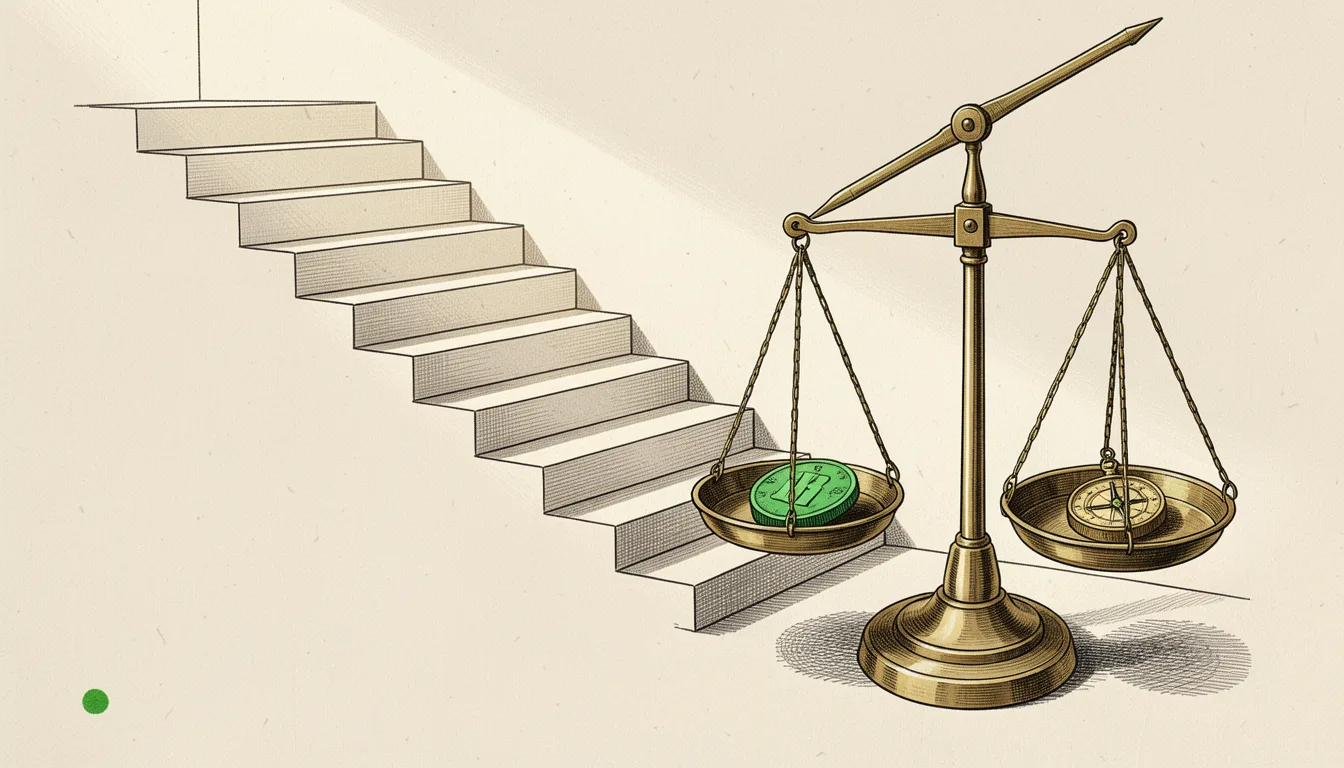
The raise is a category signal, not a roadmap
Uber set a $1,500 per-employee cap on AI tool usage after spending its entire 2026 AI budget in four months.
The cap is a spend decision, not a payment event. A card can move money, but it does not decide who can buy what, at what limit, or with what approval.
Ramp raised $750 million at a $44 billion valuation, a level nearly three times its valuation from a year earlier.
Ramp has raised more than $3 billion in total funding.
ICONIQ, GIC, and Ontario Teachers’ Pension Plan led Ramp's financing, while Goldman Sachs Alternatives, D.E. Other new investors participated in the financing.
That mix of scale and capital is the signal. Spend management is moving from a finance feature into shared infrastructure.
The raise shows the category is big enough to attract serious capital. It does not show that another card will win your buyer. Read it as proof that the category is consolidating around the workflow that controls the spend decision.
Three tests separate the raise from your roadmap
Use these tests before you treat the raise as a market signal.
- Revenue quality: Ramp's annualized revenue is above $1 billion after crossing that milestone in the prior September, and run-rate revenue is above $1.5 billion.
- Customer breadth: Ramp reached positive free cash flow and grew its customer count to more than 70,000 from 50,000 in November, with customers including Visa, Uber, Shopify, Anduril, and Figma.
- Bundling or acquisition threat: Capital One acquired Brex, a Ramp competitor, for $5.15 billion in a cash-and-stock deal, while Rippling competed by bundling spend management with HR, IT, and payroll tools.
Revenue quality shows whether the category can support a standalone business, customer breadth shows whether the buyer is broad enough to survive a price war, and the threat test exposes whether a larger platform can absorb the feature you are building.
Keep a scorecard with a pass, watch, or avoid column for each test.
A pass supports adjacent building, a watch supports integration, and an avoid means the decision workflow is already owned.
Score each test with the buyer in front of you. If the revenue is high but the customer base is narrow, treat the category as a narrow entry point, not a platform. If the threat is high, look for a decision the larger platform will not own.
If you are building vertical software, score the threat test against the workflow your buyer already trusts. Your niche still needs its own workflow.
The workflow you own is the product
Decide whether spend management is a standalone category, a feature to integrate, or a trap.
Say you run a software budget. The useful product is the policy engine that says which seats can buy which tools, what the cap is, and who approves the exception.
Build a card only if you can own the approval, policy, and reconciliation workflow around it. If your product stops at payment, you are dependent on the decision workflow.
The common mistake is to treat a large round as proof that a card is enough. The durable founder opportunity is in the workflow that owns the spend decision.
If you are unsure, start with the approval workflow. It is the smallest decision workflow that can stand alone. Start there, then expand only when the workflow earns trust.
Integration means making the spend decision visible in the product your buyer already opens; standalone means making the decision workflow painful enough to justify a separate product. If you choose neither, do not build a card.
Done looks like a roadmap that names the decision you control: policy, approval, budget, or reconciliation.